Merchant Hall of the Hylton Performing Arts Center
James Villani · Music Director
Sonic America
March 7, 2026 · 7:30 PM
-
The Star-Spangled Banner (Music 1773; Words 1814)John Stafford Smith (1750–1836)
Words by Francis Scott Key (1779–1843)
-
Eternal Father, Strong to Save (1975)Claude T. Smith (1932–1987)
arr. James Villani
- Suite No. 2, Op. 48 “Indian” (1892)Edward MacDowell (1860–1908)
- Legend: Not fast. With much dignity and character.
- Love Song: Not fast. Tenderly.
- In War-time: With rough vigor, almost savagely.
- Dirge: Dirge-like, mournfully.
- Village Festival: Swift and light.
- 20 Minute Intermission
- Grand Canyon Suite (1931)Ferde Grofé (1892–1972)
- Sunrise
- Painted Desert
- On the Trail
- Sunset
- Cloudburst
- Music for Grand Canyon Suite courtesy of the Ferde Grofé Foundation.
- This performance is copyright © 2026 Manassas Symphony Orchestra, Inc.
Program Notes
by Dr. Steven C. Fisher
This program features works by American composers who were prominent in their own day but have fallen somewhat out of fashion due to changes in taste and to the musical life of the country—but whose work is still well worth performing and hearing.
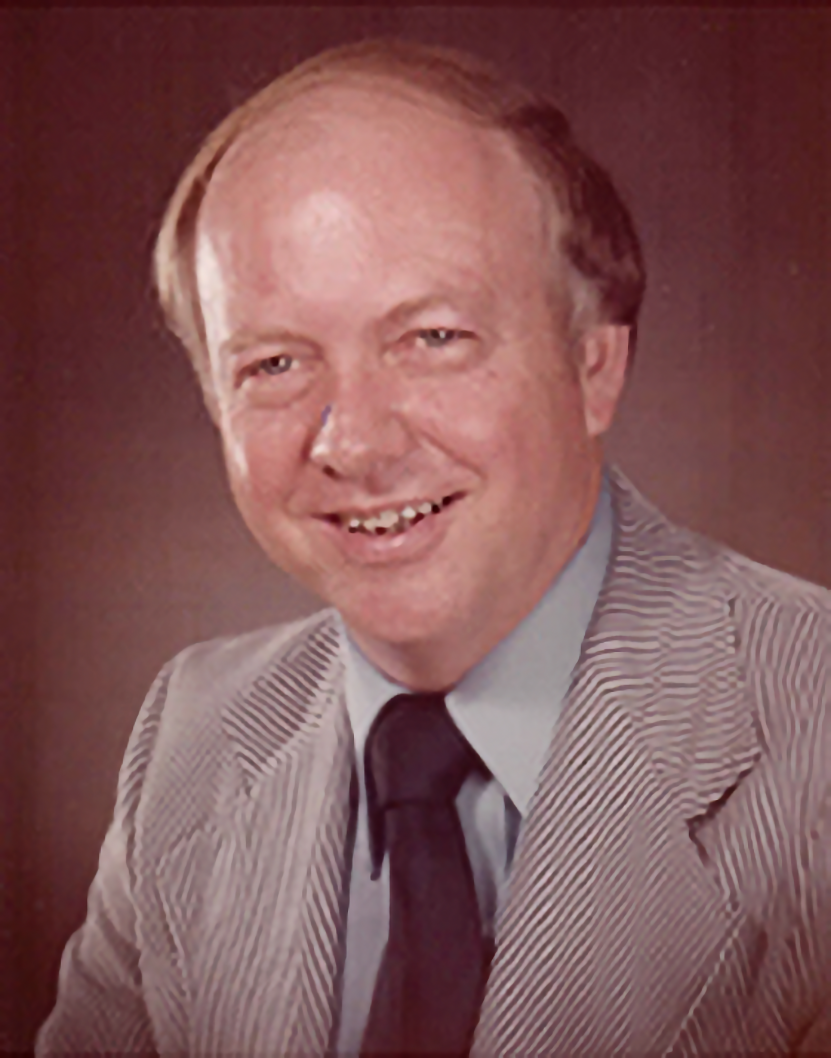
Claude T. Smith’s Eternal Father, Strong to Save stands as a definitive symphonic treatment of the “Navy Hymn” (the tune Melita), originally composed in 1975 to celebrate the 50th anniversary of the United States Navy Band. Much like Ferde Grofé, who balanced his classical training with the popular idioms of his day, Smith’s career was defined by a versatile mastery of diverse musical spheres, ranging from his service in the 371st U.S. Army Band to his prolific output of over 180 works for orchestra, choir, and wind ensemble. As noted by the legendary W. Francis McBeth, the sheer impact of the work’s opening fanfare alone cemented Smith’s status as a titan of American composition.
The work’s structure mirrors the “scenic” traditions found in works like the Grand Canyon Suite. While the original hymn is a steadfast major-key chorale, Smith begins by casting the theme in a brooding minor key, heightening the drama before transitioning into a spirited Allegro Vivace. The familiar melody is then put through its paces via several rigorous variations, including two intricate fugati—one for the woodwinds and one for the brass. A pivotal rhythmic transition, marked by Smith’s signature 7/8 measure, leads into an evocative French horn quartet that returns the hymn to its original major key in a moment of reverent, emotional clarity.
Though Smith is primarily celebrated as a master of the wind band, this arrangement for full orchestra by music director James Villani, debuted by the Manassas Symphony Orchestra in 2015, demonstrates the timelessness of his melodic invention. By translating Smith’s brass-heavy textures into the rich, varied palette of the string section, Villani keeps the composition relevant and awe-inspiring. Following in the footsteps of composers like program-mates Grofé and Edward MacDowell, Smith uses a quintessentially American subject to create a work of universal emotional power.
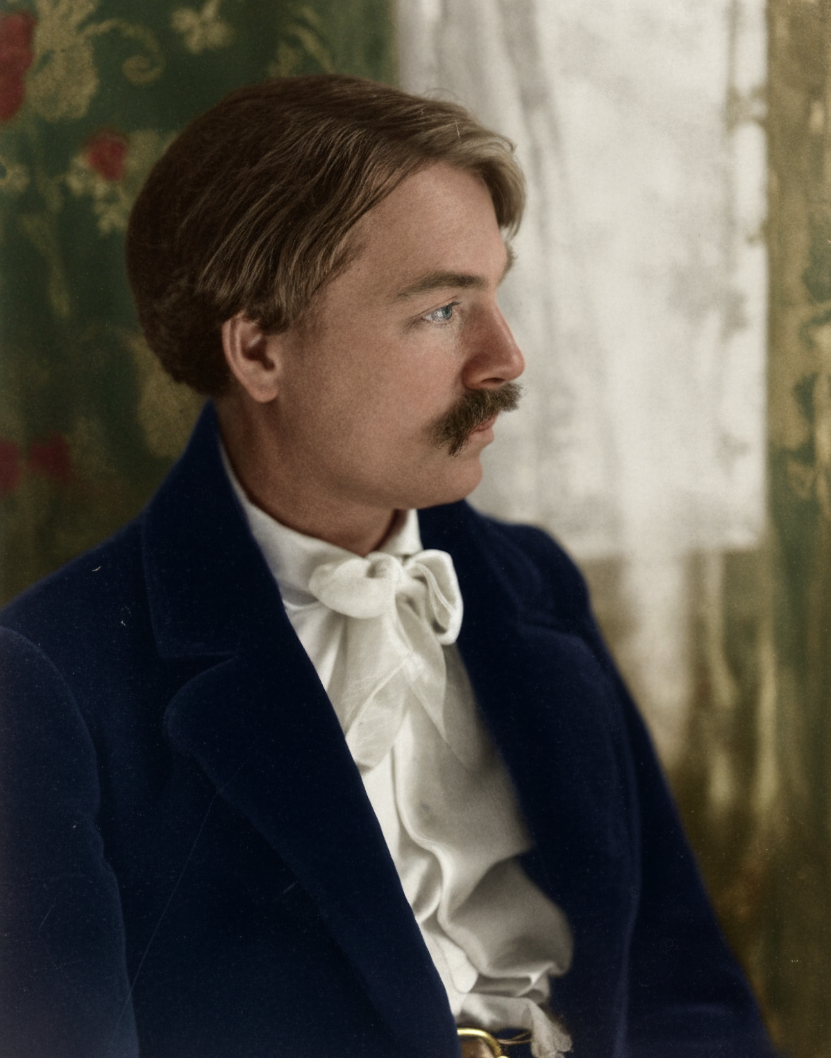
Though he was born in New York City, Edward MacDowell spent his formative years as a musician in France and especially in Germany, and his orientation as a composer was toward Europe. In this he resembled many other American classical composers of his generation, with the notable exception of George Whitefield Chadwick. On the rare occasions when he chose an American subject, it does not seem to have been one arising from his own experience. His most notable “American” piece, this orchestral suite, was freely based on Indian melodies from Theodore Baker’s book Music of the North American Wilderness, some of which reminded MacDowell of Northern European folk music. MacDowell composed the suite in Boston in 1892, before Dvořák’s famous recommendation that Americans base a national school of composition on Black and Indigenous music, an idea that MacDowell emphatically rejected.
MacDowell used material ascribed to a number of different tribes in the suite, with no attempt to preserve aspects of the originals. The titles of the movements are generally self-explanatory. The stormy opening movement depicts the tragic fate of the American Indian. In the tender, lyrical second movement most of the brass is silent, returning, of course, in the martial movement that follows. MacDowell was particularly proud of the fourth movement, which depicts a mother mourning her son. The fifth movement provides a satisfactory conclusion to the whole.
The suite, MacDowell’s largest composition, was first performed in 1896 by the Boston Symphony Orchestra and appeared on concert programs frequently over the next few years. It slipped into obscurity along with most of the work of MacDowell and his American contemporaries as Romanticism fell out of fashion. Now some of their music is being performed once more; we have heard both MacDowell’s piano concertos in these concerts in recent years.
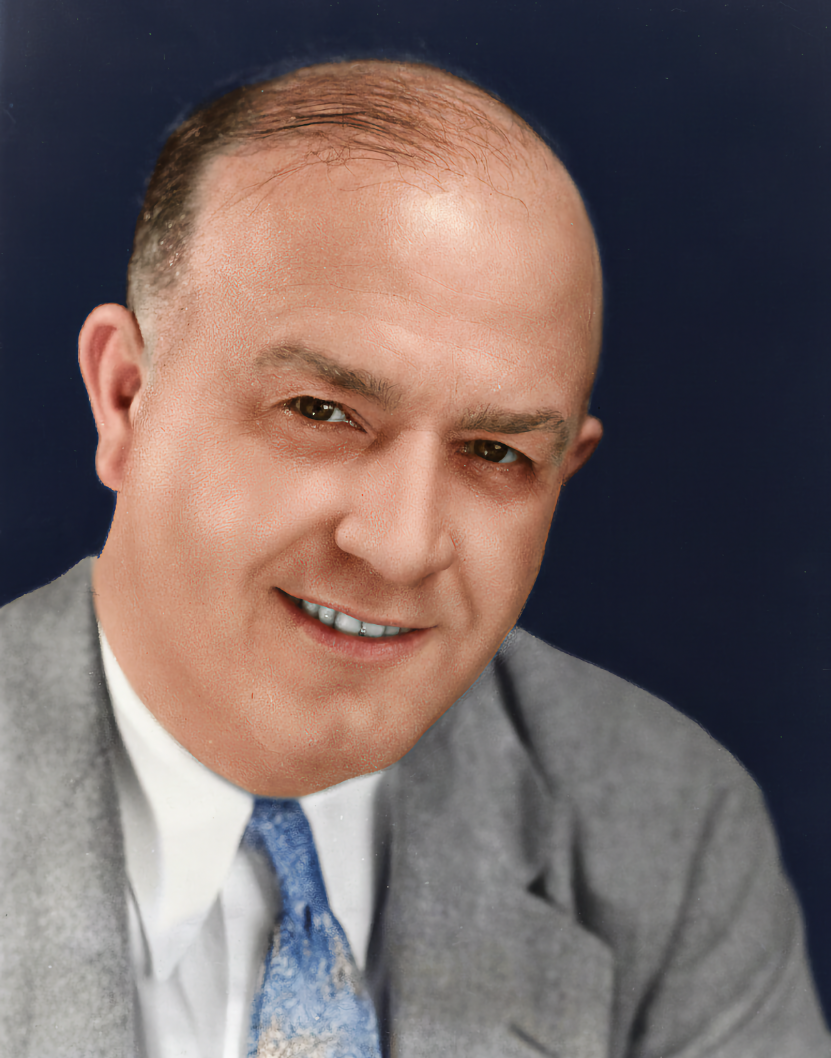
Like MacDowell, Ferdinand Rudolph von Grofé was born in New York City, but while his parents were immigrants from Germany and his family contained many professional musicians, Grofé took as much interest in the popular music of the era as he did in the classical music he studied and performed. He received thorough musical training, studying in Germany and playing viola in the Los Angeles Symphony; he also played ragtime, blues, and early jazz and roamed much of the country working musical and non-musical odd jobs—he was even a steelworker for a time. In 1920 he joined Paul Whiteman’s orchestra as keyboard player and arranger; by then he was generally known as Ferde (or Ferdie) Grofé. One high point of that period was his orchestration of Gershwin’s Rhapsody in Blue in 1924; Grofé also composed some fine original works for Whiteman, including the Mississippi Suite and Three Shades of Blue, which we have heard at these concerts. The climax of these labors, and of Grofé’s career, came with the Grand Canyon Suite, first performed in 1931. The suite quickly made its way into the orchestral repertory and was one of the most-performed pieces by an American composer for decades, though it is not heard as often nowadays. Grofé was active as composer and conductor for many years, as well as teaching orchestration at the Juilliard School of Music for a time, but never again achieved a comparable success; the musical culture was changing, and the kind of light classical music Grofé wrote was no longer in much demand.
The Grand Canyon Suite was directly inspired by Grofé’s travels in the American West. It belongs to a tradition of orchestral pieces depicting the outdoors that includes perennial favorites like Beethoven’s Pastoral Symphony (no. 6) and Rossini’s William Tell Overture, both of which we have heard in recent years. Also familiar to us today is Vivaldi’s set of violin concertos The Four Seasons, though these became widely known only after World War II. The three delightful symphonies by Haydn depicting the times of day (nos. 6–8), are also better known now than they were in the 1920s, though the scores were available then. One piece that must have been on Grofé’s mind is the magnificent Alpine Symphony of 1915 by Richard Strauss. Like the Grand Canyon Suite, Strauss’s work depicts the course of a day in an awe-inspiring landscape, starting with sunrise (also depicted by Haydn and Rossini) and of course reaching its climax in a thunderstorm (which occurs in all the works mentioned). Strauss’s work, as one would expect, features memorable melodies that recur to hold the piece together, lush harmonies, and brilliant orchestration—elements that Grofé had the skill to emulate in a lighter vein.
The movements of the suite need little comment beyond their titles. The Painted Desert depicts the changing colors of the place as the sun rises higher in the sky. On the Trail begins with the braying of the donkey whose hoofbeats provide the accompaniment for the song of the beast’s rider. They hear a waterfall and stop for refreshment at a nearby cabin, where a music box can be heard playing. Reinvigorated, man and donkey ride off, both vocalizing. At the end of the Cloudburst the clouds part to reveal the moon shining on the canyon. After 95 years, the Grand Canyon Suite is still a crowd-pleaser!
Notes copyright © 2026 Steven C. Fisher. All rights reserved. May not be copied without permission.