Saturday, October 17
American Landscapes
The Manassas Symphony Orchestra, under the baton of Maestro
James Villani, opens its 34th season with an
all-American
program featuring the world premiere of Jacob Kohut’s New Orleans-flavored
clarinet concerto,
The Quarter at Midnight.
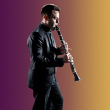
University of Houston clarinet professor Yevgeny Dokshansky takes the stage as guest
artist.
Praised by BBC Music Magazine as“highly engaging,” the Belarusian-born American
clarinetist also serves as Principal Clarinet of Baltimore’s Mid-Atlantic Symphony Orchestra.
Dr. Kohut—a Northern Virginia-based composer, devoted educator, and sergeant in the 257th Army
Band—created this innovative work on a commission by the Manassas Symphony.
The program is rounded out with music by Florence
Price (The Oak) and Morton Gould (American Salute),
concluding with Aaron Copland’s evocative Suite from Billy the Kid.
Saturday, December 12 — 3:30 PM
Holiday Light and Magic

The Manassas Symphony Orchestra celebrates the spirit of the
season
with a festive afternoon of beloved memories and whimsical discoveries. This year, our annual
tradition
spotlights the talented violinist Mira Nair, a
junior at Chantilly High School,
continuing the MSO’s commitment to showcasing the next generation of musical talent in our
community. She is performing Camille Saint-Saëns’ Introduction and Rondo
Capriccioso.
The program’s centerpiece is Ellen Taaffe
Zwilich’s Peanuts Gallery, a delightful suite that brings Charles Schulz’s
iconic characters to life—from the “Lullaby” for Linus to the energetic “Snoopy
Does the Samba.” Alongside these playful sketches, the orchestra performs a selection of
holiday
favorites and heartwarming classics.
The festivities culminate in the return of the MSO’s
fantastic
expanded indoor light and music show—an immersive display that pairs holiday favorites with a
choreographed light production, filling the hall with the true magic of the season.
Saturday, March 6
Enchanting Narratives

The Manassas Symphony Orchestra invites you to a concert of vivid
storytelling and instrumental mastery, featuring the internationally acclaimed cellist Anita Graef. Known for her “superlative
artistry” and “deeply communicative”
playing, Graef takes center stage for Camille Saint-Saëns’ Cello
Concerto
No. 1 in A Minor, a cornerstone of the repertoire celebrated for its seamless structure and
soaring
lyricism.
The program opens with the dark intensity of Antonín
Dvořák’s Othello, a dramatic overture that captures the
jealousy and
passion of Shakespeare’s tragedy through lush, late-Romantic orchestration.
The evening concludes with Deems Taylor’s
Through the Looking Glass. This symphonic suite—one of the most successful American
works of
the early 20th century—vividly depicts Alice’s adventures, from the frantic
“Jabberwocky” to the poignant “Looking-Glass Insects,” bringing Lewis
Carroll’s beloved characters to life through a colorful and witty orchestral lens.
Saturday, May 1
The Classical Tradition

The Manassas Symphony Orchestra returns to the heart of the
symphonic
tradition with a program of timeless masterworks, featuring acclaimed local pianist Lisa Tyler. Tyler joins the MSO for Wolfgang
Amadeus Mozart’s Piano
Concerto No. 20 in D minor, a masterpiece renowned for its stormy, Sturm und Drang
intensity—a rare and dramatic departure for Mozart and a perfect vehicle for Tyler’s
technical
precision and expressive depth.
The second half is dedicated to Antonín
Dvořák’s Symphony No. 8 in G major. A cornerstone of the
Romantic
era, the symphony is a lush, lyrical celebration of the natural world, drawing deeply from the folk
melodies of Dvořák’s native Bohemia.
To open the evening, the orchestra offers a festive nod to the
first
Saturday in May with Ferde Grofé’s Kentucky Derby Suite,
capturing
the pageantry and thundering excitement of “The Run for the Roses” in a colorful,
cinematic
prelude.
Manassas Symphony Orchestra concerts are supported in part by the Virginia Commission for the Arts, which
receives support from the Virginia General Assembly and the National Endowment for the Arts, a federal
agency.